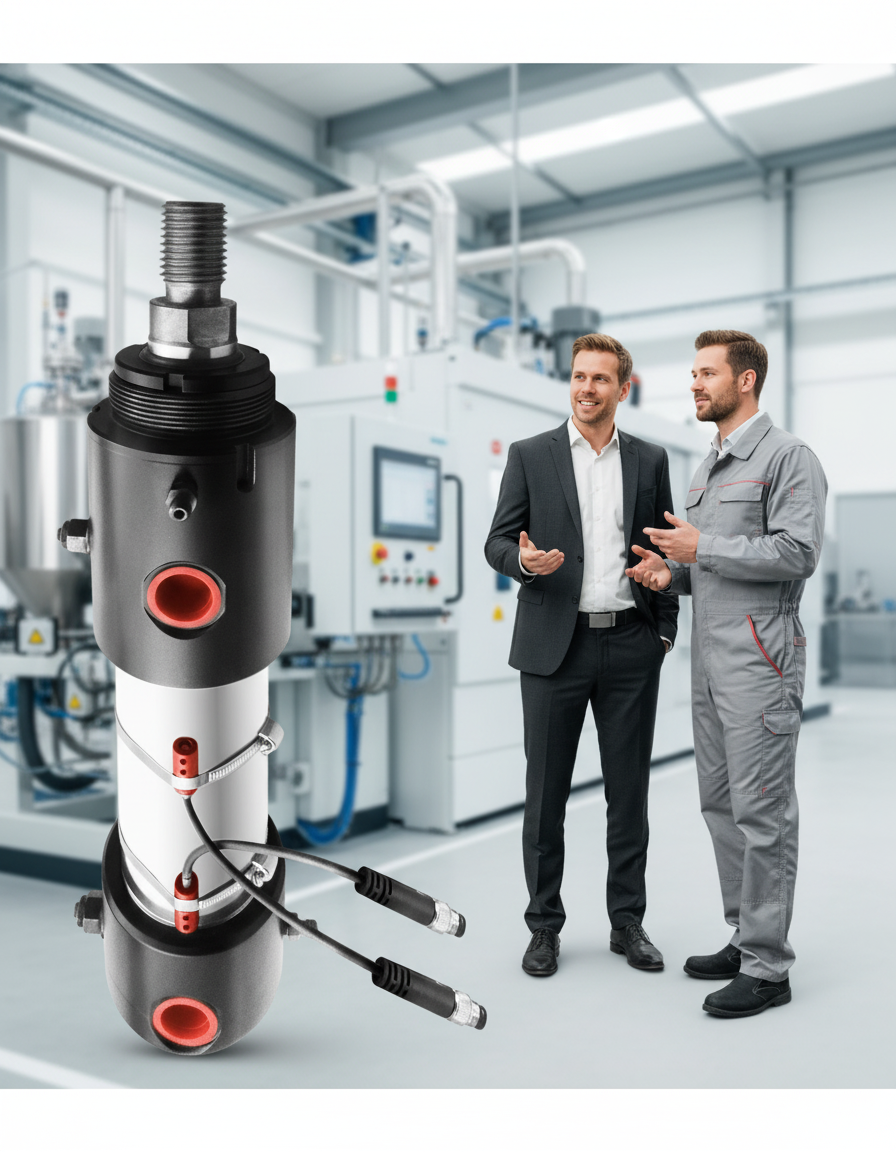
As a reliable cylinder partner we support companies with secure supplier changesthe reduction of total costs over the life cycle, international projects and long-term service with spare parts supply. Our claim: Technical strength and reliability - today and in the future. In this tutorial post, we show you how you can systematically check and replaceto avoid breakdowns, reduce costs and safeguard processes. Follow these steps for maximum efficiency.
Step 1: Analyze your current cylinder inventory
Make an inventory of all cylinders in your company: note the type, manufacturer, age, stroke, diameter and area of application (e.g. steel construction, mechanical engineering or toolmaking). Tip: Create a table with columns for "status" (new/worn), "cost per year" and "downtime". This reveals weak points such as high maintenance costs or missing spare parts. Warning: Do not ignore special cylinders - these account for a large number of the problems.
Step 2: Evaluate the partner for core competencies
Check: Does your partner offer New production according to sample or drawingrepair in-house and international delivery? Compare with criteria such as piston diameter >200 mm, CNC precision and industry expertise (e.g. cement works or press construction). Tip: Use KPIs: life cycle costs (production + maintenance) should fall.
Step 3: Test a safe change of supplier
Choose a pilot cylinder for the change: Request a customized customized new production with a guarantee of compatibility. Integrate tests into ongoing operations, including spare parts logistics. Step-by-step:
- Send sample/drawing.
- Receive prototype in 4-6 weeks.
- Test under real conditions (pressure, stroke, environment).Warning: Allow for buffer time - change without structure costs double.
Step 4: Reduce overall costs in the long term
Optimize over Life cycleChoose robust materials for longevity and minimal maintenance. Negotiate service packages with on-site repair and global spare parts supply. Tip: Calculate ROI: New partners save through efficiency and innovation.
Step 5: Finalize and scale
After a successful pilot: expand to series production. Define KPIs for the partner contract (e.g. delivery time <4 weeks, availability 99%). Next step: Talk to us - we support you with Experience, structure and clarity. Put your partnership to the test!
These steps will make you more independent, cost-efficient and future-proof. Try it out - your business will benefit immediately!